apan is home to thousands of shrines (jinja, 神社), each with its own history, spiritual significance, and breathtaking architecture. Whether you’re visiting famous shrines in Kyoto or discovering hidden gems in the countryside, exploring Shinto shrines is a unique way to experience Japan’s culture and traditions.
In this guide, we’ll cover the history of shrines, how to visit them properly, must-visit shrines, and their cultural significance.
1. What Are Shinto Shrines?
Shrines are places of worship in Shinto (Japan’s indigenous religion), dedicated to kami (spirits or deities). Unlike Buddhist temples, which are places of meditation and rituals for the afterlife, shrines are focused on nature worship, purity, and blessings for this life.
Key Features of a Shrine:
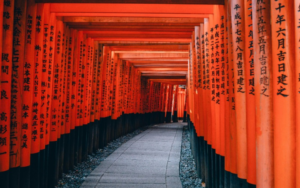
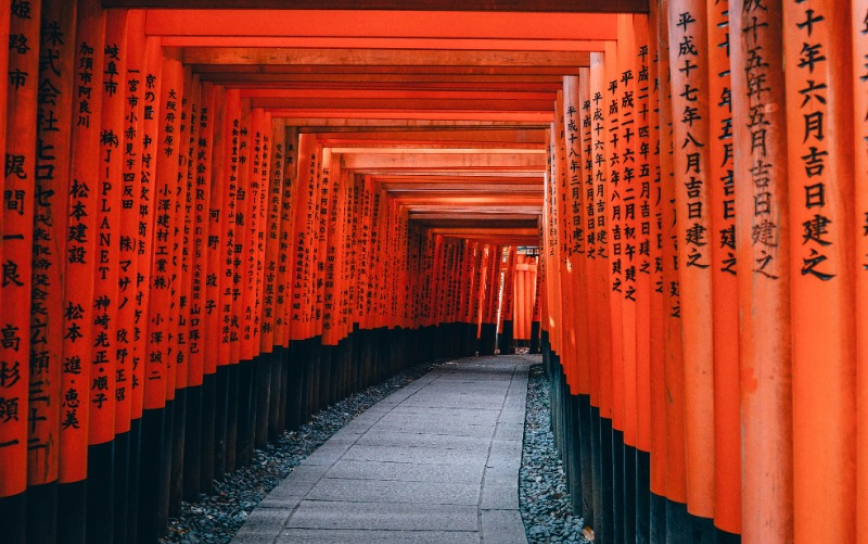
• Torii Gate (鳥居) – The entrance to the shrine, marking sacred space.
• Komainu (狛犬) – Guardian lion-dog statues that protect the shrine.
• Chōzuya (手水舎) – A purification station where visitors cleanse their hands and mouth.
• Main Hall (本殿, Honden) – The sacred heart of the shrine where the kami is enshrined.
• Ema (絵馬) & Omikuji (おみくじ) – Wooden plaques for wishes and fortune-telling papers.
2. How to Visit a Shrine Properly: Step-by-Step Guide
Visiting a shrine in Japan follows a unique set of customs. Here’s a simple guide to Shinto etiquette:
① Pass Through the Torii Gate Respectfully
• Walk on the side of the path, not the center, as the middle is reserved for kami.
• Bow slightly before entering.
② Purify Yourself at the Chōzuya
• Use the ladle to pour water over your left hand, then your right hand.
• Rinse your mouth (without swallowing), then cleanse the ladle.
③ Offer Prayers at the Main Hall
1. Toss a small coin (usually 5 yen, as it sounds like “good fate” in Japanese).
2. Bow twice deeply.
3. Clap twice to awaken the kami.
4. Make a silent wish or prayer.
5. Bow once more before leaving.
④ Draw an Omikuji (Fortune Slip) or Write an Ema
• If your omikuji predicts bad luck, tie it to the designated area at the shrine.
• Write your wishes on an ema (wooden plaque) and hang it with others.